
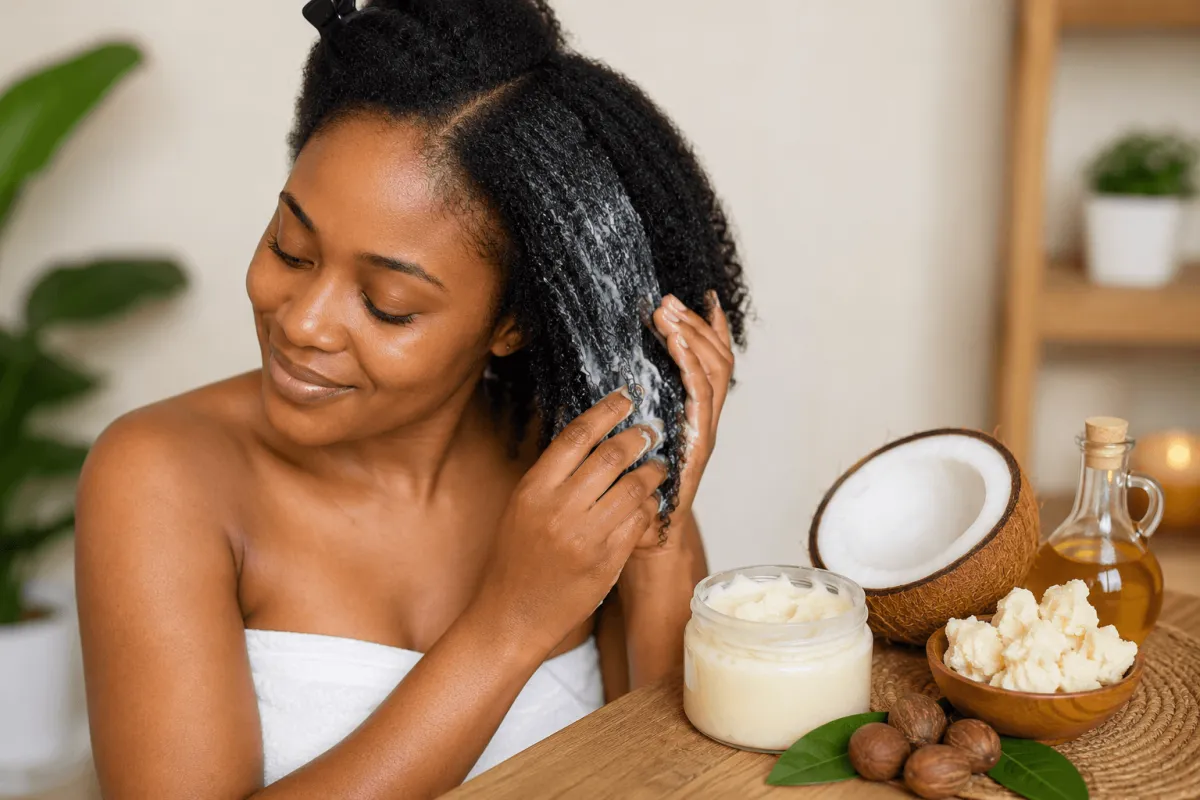
If you’ve already made the switch to natural shampoo, congratulations. You’ve taken one of the most important steps toward healthier Nigerian hair. However, here’s something most people don’t realize: switching to natural shampoo while keeping your commercial conditioner is like eating healthy food but washing it down with a soft drink.
Your conditioner is just as important as your shampoo. Moreover, most commercial conditioners contain silicones, parabens, and synthetic ingredients that coat your hair with a temporary sheen while blocking moisture from actually penetrating. Consequently, your hair looks shiny but remains dry and brittle underneath.
As Nigeria’s leading cosmetic raw materials supplier at Sophix Natural, we’ve helped hundreds of beauty entrepreneurs create complete natural hair care lines. Furthermore, we’ve watched Nigerian women achieve their healthiest hair ever simply by replacing commercial conditioners with these simple homemade alternatives.
Today, I’m sharing three complete natural conditioner home recipes covering deep conditioning, regular conditioning, and leave-in conditioning. Additionally, I’ll cover exactly which ingredients work best for Nigerian hair, how to use each recipe correctly, and how to turn this into a profitable business.
Let’s get into it.
Why Commercial Conditioners Are Failing Nigerian Hair
Before jumping into the natural conditioner home recipes, let’s understand exactly what’s wrong with most commercial conditioners.
The biggest problem is silicones. Specifically, ingredients ending in “-cone,” “-conol,” or “-xane” (dimethicone, cyclomethicone, amodimethicone) are synthetic silicone compounds that coat the hair shaft. Consequently, your hair feels smooth and looks shiny immediately after use. However, this is an illusion.
Over time, silicones build up on your hair in layers. As a result, moisture can no longer penetrate to where it’s actually needed. Furthermore, this buildup weighs hair down, causes limp lifeless strands, and requires harsher shampoos to remove it. Consequently, you get trapped in a cycle of stripping and coating that prevents your hair from ever truly thriving.
Additionally, according to research published on PubMed, many commercial conditioning agents contain quaternary ammonium compounds that, while effective short-term, can cause protein damage with repeated long-term use. For Nigerian hair that’s already naturally fragile and protein-sensitive, this cumulative damage is significant.
The solution is conditioning ingredients that actually penetrate the hair shaft and deliver real, lasting benefits rather than surface-level coating.
What Makes a Great Natural Conditioner for Nigerian Hair
Understanding the components of effective natural conditioning helps you formulate confidently and customize recipes for your specific hair needs.
Emollients (What Makes Hair Soft)
Emollients are oils and butters that soften and smooth the hair cuticle. Furthermore, they reduce friction between strands, making hair more manageable and less prone to tangling. The best emollients for Nigerian hair penetrate the hair shaft rather than just coating the surface.
Best emollients for Nigerian hair:
- Shea butter (deeply moisturizing, vitamin-rich)
- Coconut oil (penetrates hair shaft, reduces protein loss)
- Sweet almond oil (lightweight, adds shine)
- Avocado oil (rich in penetrating fatty acids)
Humectants (What Attracts Moisture)
Humectants attract water molecules from the environment to your hair. Consequently, they maintain hydration levels throughout the day rather than just immediately after washing. For naturally dry Nigerian hair, humectants are essential ingredients.
Best humectants for Nigerian hair:
- Vegetable glycerine (most effective, widely available)
- Aloe vera gel (natural humectant with additional benefits)
- Honey (natural humectant with antibacterial properties)
Proteins (What Strengthens Hair)
Proteins temporarily fill gaps in damaged hair cuticles, strengthening strands and reducing breakage. Additionally, they improve hair elasticity, making strands more resistant to mechanical damage. However, protein must always be balanced with moisture to prevent brittleness.
Best natural proteins:
- Hydrolyzed wheat protein (penetrates hair shaft)
- Silk amino acids (adds incredible softness and shine)
- Egg (whole food protein, easy DIY option)
pH Adjusters (What Keeps It Safe)
Conditioner should have a slightly acidic pH between 3.5-4.5. This closes the hair cuticle, adds shine, and prevents frizz. Consequently, always check and adjust pH before bottling.
Preservatives (What Keeps It Fresh)
Any conditioner containing water needs a broad-spectrum preservative. Therefore, this is non-negotiable for safety and shelf life.
What You’ll Need
Basic Ingredients (Used Across All Recipes):
Moisturizing Base:
- Natural Shea Butter – Deep conditioning powerhouse
- Coconut Oil – Penetrating conditioner
- Sweet Almond Oil – Lightweight conditioning
- Vegetable Glycerine – Essential humectant
Additional Ingredients:
- Distilled or de-ionized water
- Emulsifying wax (BTMS-50 is ideal for conditioners)
- Cetyl alcohol (thickener and conditioner)
- Preservative (Germall Plus)
- Essential oils of choice
- Citric acid (for pH adjustment)
- pH strips
Equipment:
- Digital kitchen scale
- Double boiler setup
- Hand mixer or whisk
- Thermometer
- pH strips or digital meter
- Clean wide-mouth jars or pump bottles
- Labels
Total cost: Approximately ₦2,000-₦2,500 to make 250ml of premium natural conditioner
Recipe 1: Natural Conditioner Home Basic Recipe (Regular Conditioner)
This is your everyday conditioner, designed for use after every shampoo session. Furthermore, it’s lightweight enough for regular use without causing buildup.
Makes: 250ml
Ingredients by Weight:
Water Phase (heat to 70°C):
- Distilled water – 145g (58%)
- Vegetable Glycerine – 10g (4%)
- Aloe Vera Juice – 20g (8%)
Oil Phase (heat to 70°C):
- BTMS-50 Emulsifying Wax – 15g (6%)
- Cetyl Alcohol – 10g (4%)
- Coconut Oil – 15g (6%)
- Sweet Almond Oil – 10g (4%)
- Natural Shea Butter – 10g (4%)
Cool Down Phase (add at 40°C):
- Preservative (Germall Plus) – 1g (0.5%)
- Essential oils – 10-15 drops
- Citric acid solution (for pH adjustment)
Total: 250g
Step-by-Step Instructions:
Step 1: Prepare and Sanitize Equipment (5 minutes)
Spray all equipment with 70% isopropyl alcohol and let air dry completely. This prevents contamination that would cause your conditioner to spoil prematurely. Furthermore, weigh and measure all ingredients before starting to make the process smoother.
Step 2: Heat Both Phases Separately (10 minutes)
Place your water phase ingredients (water, glycerine, aloe vera) in one heat-safe bowl. Additionally, place all oil phase ingredients (BTMS-50, cetyl alcohol, coconut oil, sweet almond oil, shea butter) in a separate heat-safe bowl.
Heat both bowls simultaneously in a double boiler to 70-75°C. Stir occasionally. Specifically, both phases must reach the same temperature before combining. Consequently, this ensures proper emulsion formation.
What you’ll see: The oil phase will melt into a clear liquid. Meanwhile, the water phase will remain clear but slightly warm.
Step 3: Combine Phases (3 minutes)
Once both phases reach 70-75°C, slowly pour the water phase INTO the oil phase while mixing continuously with a hand mixer on low speed.
Important: Pour water into oil, not oil into water. Furthermore, pour slowly and steadily rather than all at once. This creates a more stable, smoother emulsion.
What you’ll see: The mixture immediately turns white and creamy as the emulsifier does its work. This is exactly what should happen. Continue mixing for 3-5 minutes until fully combined.
Step 4: Mix While Cooling (15-20 minutes)
Continue stirring or mixing occasionally as the conditioner cools. Specifically, stir every 2-3 minutes to ensure even cooling and prevent separation.
The conditioner will thicken noticeably as it cools. Consequently, it transforms from a thin white liquid to a thick, creamy consistency similar to commercial conditioner.
Step 5: Add Cool Down Ingredients (2 minutes)
Once temperature drops to 40°C or below, add your preservative and essential oils. Stir gently but thoroughly to incorporate.
Essential oil suggestions for conditioner:
Lavender (10 drops) – calming, suitable for sensitive scalps
Rosemary (10 drops) – supports scalp health and growth
Ylang ylang (5 drops) – balances scalp oil production
Peppermint (5 drops) – refreshing, stimulating
Step 6: Test and Adjust pH (5 minutes)
Test the pH of your cooled conditioner. The ideal range is 3.5-4.5.
If pH is too high: Dissolve a small amount of citric acid in water. Add drop by drop, stirring after each addition. Retest until pH is correct.
If pH is too low: Add a tiny amount of sodium bicarbonate dissolved in water. Stir and retest.
Why pH matters for conditioner: According to the International Journal of Cosmetic Science, conditioner at the correct acidic pH closes the hair cuticle effectively. Consequently, hair is smoother, shinier, and significantly less prone to frizz and breakage.
Step 7: Package and Label (5 minutes)
Transfer to clean, sanitized containers. Wide-mouth jars work best for thick conditioner. Additionally, pump bottles work if the consistency is slightly thinner.
Shelf life: 3-6 months with proper preservation and clean usage habits.
Recipe 2: Natural Conditioner Home Deep Conditioner (For Weekly Treatment)
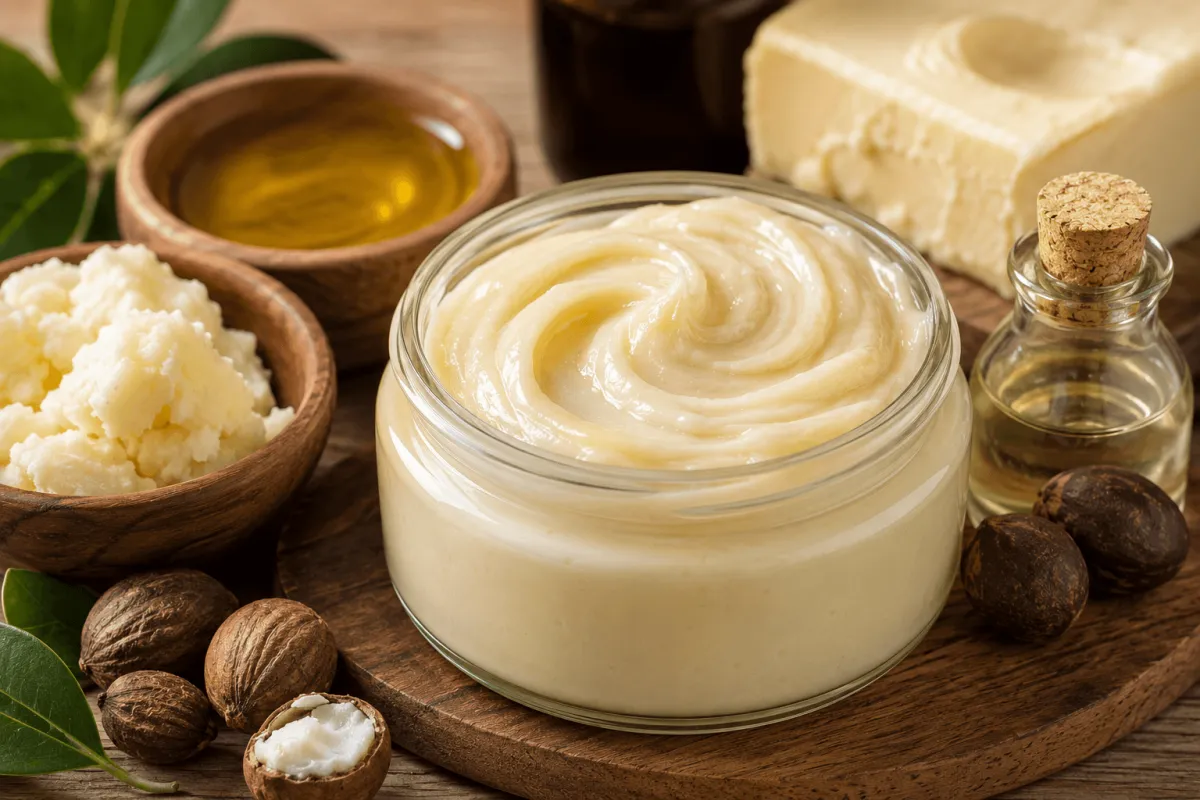
This is your weekly intensive treatment designed to deeply restore moisture, strength, and shine. Furthermore, this recipe is particularly powerful for dry, damaged, or chemically treated Nigerian hair.
Makes: 200ml (concentrated formula, use less per application)
Ingredients by Weight:
Water Phase (heat to 70°C):
- Distilled water – 100g (50%)
- Vegetable Glycerine – 15g (7.5%)
- Aloe Vera Juice – 20g (10%)
- Honey – 10g (5%)
Oil Phase (heat to 70°C):
- BTMS-50 Emulsifying Wax – 12g (6%)
- Cetyl Alcohol – 8g (4%)
- Natural Shea Butter – 15g (7.5%)
- Coconut Oil – 10g (5%)
- Sweet Almond Oil – 5g (2.5%)
Cool Down Phase:
- Preservative – 1g (0.5%)
- Hydrolyzed wheat protein – 5g (2.5%)
- Essential oils – 10 drops
Total: 200g
What Makes This Different from Recipe 1:
Higher butter and oil content provides more intensive moisturization for weekly deep treatment.
Honey acts as a powerful natural humectant and adds antibacterial properties. Additionally, it gives the conditioner a slight natural scent.
Hydrolyzed wheat protein strengthens damaged hair from within. Consequently, this recipe is particularly effective for relaxed, transitioning, or heat-damaged hair.
Higher glycerine percentage means maximum moisture attraction for intensive hydration.
Instructions:
Follow the exact same steps as Recipe 1. However, note that this conditioner will be slightly thicker due to the higher butter content. Consequently, use a wide-mouth jar for storage rather than a pump bottle.
How to Use Deep Conditioner Correctly:
Step 1: Shampoo hair as normal with your natural shampoo.
Step 2: Gently squeeze excess water from hair. Don’t rub with towel.
Step 3: Apply deep conditioner generously from roots to ends. Specifically, section hair into 4-6 parts and apply systematically to ensure every strand is covered.
Step 4: Put on a shower cap. Then, sit under a hooded dryer for 20-30 minutes. Alternatively, wrap a warm towel around your head to generate heat. Heat is critical because it opens the cuticle and allows the conditioner to penetrate deeper.
Step 5: Rinse thoroughly with cool water. Cool water closes the cuticle and seals in the conditioning benefits.
Step 6: Style as normal. You’ll notice immediately that hair is more manageable, softer, and shinier than with commercial deep conditioners.
Frequency: Once weekly for damaged or very dry hair. Every 2 weeks for normal hair as maintenance.
Recipe 3: Natural Conditioner Home Leave-In Spray (Bonus Recipe!)
This lightweight leave-in conditioner is your daily moisturizer for natural hair between wash days. Furthermore, it’s perfect for refreshing hair in the morning or after exercise without weighing it down.
Makes: 200ml spray bottle
Ingredients:
- Distilled water – 150g (75%)
- Aloe Vera Juice – 20g (10%)
- Vegetable Glycerine – 10g (5%)
- Sweet Almond Oil – 10g (5%)
- Coconut Oil (fractionated, liquid) – 5g (2.5%)
- Preservative – 1g (0.5%)
- Essential oils – 8 drops
- Emulsifying wax – 3g (1.5%) (needed to bind oil and water)
Instructions:
Step 1: Heat water and aloe vera juice together to 70°C.
Step 2: Melt emulsifying wax with coconut oil and sweet almond oil to 70°C separately.
Step 3: Pour water phase into oil phase while mixing continuously.
Step 4: Cool while stirring. When temperature reaches 40°C, add glycerine, preservative, and essential oils.
Step 5: Allow to cool completely. Then, transfer to a spray bottle using a funnel.
Step 6: Shake well before each use because the formula may separate slightly between uses.
How to Use Leave-In Conditioner:
Spray onto damp or dry hair sections as needed. Specifically, use on dry ends that need moisture, on the scalp for a hydration boost, or all over before styling for definition and moisture retention. Additionally, follow with a light oil to seal in the moisture that the leave-in conditioner has attracted.
Natural Conditioner for Different Nigerian Hair Types
For Natural Hair (4C, 4B, 4A)
Natural hair needs maximum moisture and slip for detangling. Therefore, increase shea butter to 20g and glycerine to 15g in Recipe 1. Furthermore, add 5g of avocado oil if available for extra penetrating moisture. Use Recipe 2 (deep conditioner) every single wash day for highly textured natural hair.
Application tip: Apply conditioner to soaking wet hair in sections. Use a wide-tooth comb to detangle from ends to roots while conditioner is in hair. This dramatically reduces breakage during detangling.
For Relaxed Hair
Relaxed hair needs protein balance alongside moisture. Consequently, add 5g of hydrolyzed wheat protein to Recipe 1 for regular conditioning. Furthermore, use Recipe 2 (deep conditioner) weekly between relaxer touch-ups to maintain strength.
Application tip: Focus conditioner on the new growth area where breakage most commonly occurs. Leave on for 5-10 minutes longer than recommended for extra penetration.
For Transitioning Hair
The line between natural new growth and relaxed hair is extremely fragile. Therefore, use Recipe 2 (deep conditioner) every wash day during the transitioning period. Additionally, finger detangle rather than using a comb while conditioner is in hair to minimize breakage at the fragile line of demarcation.
For Low-Porosity Hair
Low-porosity hair resists product absorption because the cuticle lies flat. Consequently, heat is essential when conditioning this hair type. Always use a shower cap and sit under a hooded dryer. Furthermore, use lightweight oils (sweet almond rather than shea butter) in your conditioner to prevent product from sitting on top of hair.
For High-Porosity or Damaged Hair
High-porosity hair absorbs moisture quickly but also loses it quickly. Therefore, add more protein (hydrolyzed wheat protein 7.5g) to your conditioner recipe. Additionally, use Recipe 2 weekly and always follow with a sealant oil to lock moisture in after rinsing.
Troubleshooting Your Natural Conditioner
Problem: Conditioner separated into liquid and solid layers
Why: Emulsion broke during cooling, or emulsifying wax percentage was too low.
Fix: Reheat to 70°C, mix vigorously, and cool again slowly while stirring continuously. Furthermore, increase BTMS-50 by 2-3g in future batches.
Problem: Conditioner is too thick and won’t spread
Why: Too much butter or cetyl alcohol, or insufficient water.
Fix: Add distilled water 5g at a time while mixing until desired consistency. Additionally, reduce shea butter by 5g in future batches.
Problem: Conditioner is too thin and watery
Why: Insufficient emulsifying wax or butter content.
Fix: Melt additional BTMS-50 (3-5g), add to warmed conditioner, and mix thoroughly. Alternatively, increase butter content by 5g in future batches.
Problem: Hair feels greasy after conditioning
Why: Too much oil content, or using too much conditioner per application.
Fix: Use less product per application. Furthermore, reduce coconut oil and shea butter content in future batches and increase water percentage.
Problem: Conditioner smells off after 2-3 weeks
Why: Insufficient preservative or contaminated equipment.
Fix: Ensure preservative is at correct usage rate (0.5-1%). Additionally, always use clean, dry hands or a spatula to scoop product rather than fingers that may introduce bacteria.
Problem: Hair feels dry even after conditioning
Why: pH is too high, or conditioner isn’t penetrating hair adequately.
Fix: Check and lower pH to 3.5-4.5. Additionally, apply conditioner with heat to improve penetration for low-porosity hair specifically.
Packaging and Selling Your Natural Conditioner
Natural conditioner is an excellent product for Nigerian beauty entrepreneurs. Here’s everything you need to know about making it a profitable business.
Container Options:
Wide-mouth glass jars (150-250ml): Premium appearance that justifies higher prices. Customers can see the product texture, building trust. Additionally, they’re reusable and eco-friendly.
Plastic squeeze tubes (150-200ml): Practical and hygienic for regular conditioner. Furthermore, they’re lighter for delivery and shipping.
Pump bottles (250-500ml): Most professional appearance for salons and bulk buyers. Consequently, these command the highest wholesale prices.
Pricing Your Natural Conditioner:
Cost breakdown per 250ml jar:
- Ingredients: ₦800-₦1,000
- Container and label: ₦300-₦500
- Total cost: ₦1,100-₦1,500
Recommended retail prices:
- Regular conditioner: ₦2,500-₦3,500 per 250ml
- Deep conditioner: ₦3,500-₦5,000 per 250ml (premium positioning)
- Leave-in spray: ₦2,000-₦3,000 per 200ml
Profit per unit: ₦1,000-₦3,500 depending on recipe and positioning
Scale example: Selling 25 deep conditioner jars monthly at ₦4,500 each = ₦112,500 revenue, approximately ₦80,000 profit. That’s excellent income for a few hours of production!
Building a Complete Natural Hair Care Line:
With your natural shampoo post already published and this conditioner guide, you’re building something strategically powerful: a complete natural hair care line that customers can buy together.
Market your complete line as:
- Natural Shampoo (₦3,500)
- Natural Deep Conditioner (₦4,500)
- Natural Leave-In Spray (₦2,500)
- Natural Hair Growth Oil (₦3,500)
Bundle price: ₦12,000 (saving ₦2,000 on individual prices)
Bundles increase average order value significantly. Consequently, one customer buying the complete line generates almost as much revenue as four individual product sales.
Marketing Tips:
Position your products as “silicone-free” and “made specifically for Nigerian hair.” Additionally, demonstrate the difference between your natural conditioner and commercial alternatives through educational content. Furthermore, share transformation stories from customers with before-and-after photos for maximum credibility.
Your Action Plan: Make Your First Batch This Weekend
You now have three complete natural conditioner home recipes covering every Nigerian hair need. Here’s exactly what to do next.
First, decide which recipe suits your immediate needs. Start with Recipe 1 (regular conditioner) if you’re completely new to formulation.
Second, gather all your ingredients from a quality supplier to ensure consistent, safe results.
Third, invest in a digital kitchen scale and pH strips. These two tools are non-negotiable for professional results.
Fourth, follow the complete shampoo-conditioner-leave-in system for maximum hair transformation. Using all three together produces dramatically better results than any single product alone.
Finally, commit to the routine for 8 weeks minimum. Take weekly hair photos to track your transformation objectively.
Ready to start? Get your quality ingredients:
- Natural Shea Butter – Your primary deep conditioning ingredient
- Coconut Oil – Penetrating conditioner for all recipes
- Sweet Almond Oil – Lightweight conditioning oil for all recipes
- Vegetable Glycerine – Essential humectant for all three recipes
Have you made natural conditioner at home before? What ingredients work best for your hair type? Share your experience in the comments below. Our community of 5,000+ Nigerian beauty enthusiasts would love to hear from you and learn from your journey!